Reduced-order models (ROMs) seek low-dimensional descriptions of complex dynamical systems to enable fast simulation, forecasting, and control. Many ROMs for large-scale nonlinear systems choose variables according to how well they reconstruct observed system states. This reconstruction principle is highly effective when state trajectories are well approximated by a low-dimensional manifold and quantities of interest are insensitive to the resulting reconstruction errors. However, it can fail when poorly sampled off-manifold directions strongly affect future behavior, as in shear-dominated flows that selectively amplify certain low-energy perturbations. I will present an alternative viewpoint using gradients of state-to-future maps to measure the dynamical consequences of state-reconstruction errors and to find reduced order modeling variables grouping states into fibers of nearly-equivalent future behavior. In several nonlinear examples, future behavior depends mainly on a few active directions, yielding linear reduced variables that gradients can identify without probing every direction in high-dimensional state space. Recent advances in differentiable simulation make these gradients increasingly practical to obtain through reverse-mode automatic differentiation and other adjoint methods. I will illustrate this gradient-informed model reduction framework through applications to nonlinear fluid-flow forecasting, prediction and suppression of extreme events, and reduced-order optimal control.
About the speaker: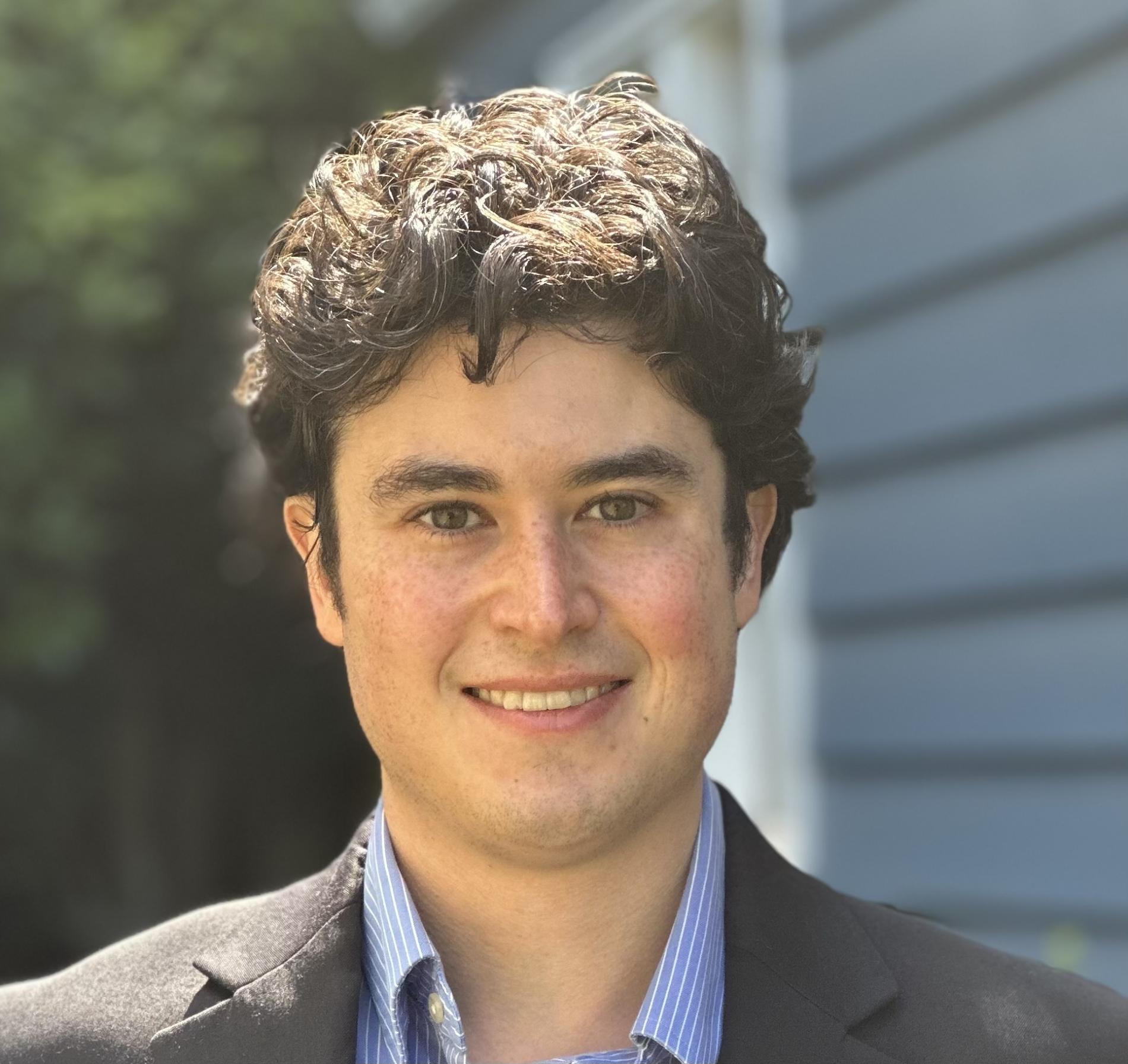
Dr. Otto joined the Cornell MAE faculty as an Assistant Professor in July 2024. His lab exploits mathematical structure and data to develop faster algorithms for simulating, learning, reducing, and controlling complex engineering systems. Prior to this, he was a Postdoctoral Scholar at the AI Institute in Dynamic Systems at the University of Washington. He received his Ph.D in mechanical and aerospace engineering from Princeton University in May 2022 and his B.S. in aeronautics and astronautics from Purdue University in 2016. He enjoys science fiction, fantasy, spicy food, and can usually be found in a coffee shop with a math textbook.
