Dr. Elizabeth Kam has been recognized with the 2026 Outstanding Teaching Award from the School of Science. Dr. Kam has served as a Lecturer in the Department of Mathematical Sciences since 2016, teaching differential equations to approximately 500 students each year, mathematics courses for non-STEM majors, and upper division courses on advanced calculus and operations research. Throughout her time at RPI, she has received consistently outstanding student evaluations across her teaching portfolio. Dr. Kam’s award citation included the following student testimonials: “What makes Dr. Kam an outstanding teacher is how her students respond to nearly every question she asks without fear of being judged by peers, her remarkable instinct for meeting students exactly where they are. Students comment whenever the classroom is silent Dr. Kam would pivot to real-world applications to keep them engaged: connecting ordinary differential equations to flight path modeling, or using partial differential equations to illustrate heat flow at high altitude, discussing Fourier Series using a harmonica as an example of sound that could be replicated by, ultimately, some number of partial sums.” What shines through is the exceptional personal warmth Dr. Kam brings to her teaching while expecting and maintaining rigor in the assessments of learning. Teaching and course assistants who worked with Dr. Kam also report the extent to which she cared about their personal and professional development, engaging them in content creation for recitations and exams and providing constructive critical feedback. Dr. Kam exemplifies the educational value and personal impact the Teaching Faculty provide to undergraduate students at RPI.
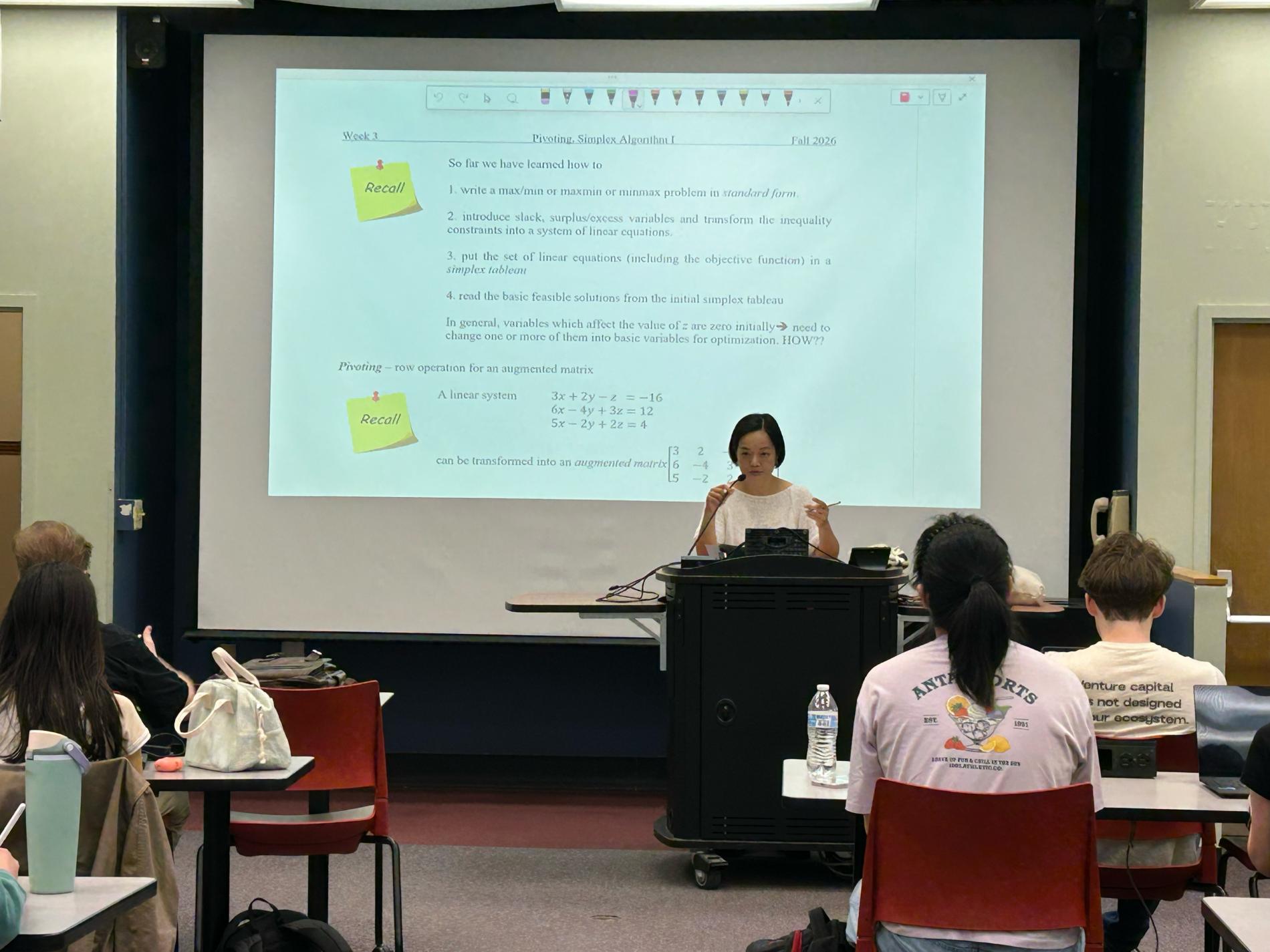
The Outstanding Teaching Award recognizes a faculty member from the School of Science for excellence in classroom instruction and other educational activities, high regard by students for teaching accomplishments, and excellence in student mentoring, integrating research into the teaching program, course and curricular innovation, novel pedagogical approaches, or service in introductory or required courses with large enrollments.
